


Blog · QuickBooks to NetSuite
Outgrowing QuickBooks Desktop? 5 signs you’re ready for NetSuite and 3 signs you’re not.
Short answer: A distributor is ready to leave QuickBooks Desktop when the chain from a contractor’s order to the cleared payment breaks in more than one place, not when revenue crosses a magic number. If inventory, orders and cash live in different places, it’s time for one connected system like NetSuite. If only one thing hurts, fix the process first.
Think of it like the human body. One sore knee doesn’t mean surgery. But when the knee, the back and the heart all hurt at once, the problem isn’t one part. It’s the whole system.
I get why the question is loud right now. Intuit stopped selling QuickBooks Desktop Pro Plus, Premier Plus and Mac Plus to new US subscribers after September 30, 2024 (Intuit). Then it said Desktop 2024 won’t be discontinued in May 2027 and will keep getting updates (Intuit). So owners search “is QuickBooks Desktop being phased out” and get mixed answers.
Here’s my position. The software calendar shouldn’t make this decision for you. Your business should.
Definition: ERP. An ERP (enterprise resource planning system) such as NetSuite keeps orders, inventory, purchasing, customers and accounting in one shared record, so sales, the warehouse and accounting all work from the same numbers.
When is a distributor ready to switch from QuickBooks to NetSuite?
Look for these five signs. Two or more at the same time is the signal.
The shelf and the screen don’t agree
Counts drift. Someone adjusts the number to make it match. Next month it drifts again. You can see the same frustration in the QuickBooks Community. One distributor on Reddit put it plainly: the warehouse updates its numbers, sales updates theirs, and the two never match. More frequent manual syncs only ate up everyone’s time (r/CPGDistributors).
That’s what was seen at Spray Alliance before the move. No inventory control and nothing synced live. When adjustments become a broom, the leak is upstream: receiving, bins, transfers and will-calls that never got billed.
The truth lives in spreadsheets and in people’s heads
Sales keeps its own list. The warehouse keeps another. The owner carries the rest. With no CRM, nobody clearly owns a customer, a quote or a follow-up. The team isn’t lazy. The system never gave them one place to work.
At Spray Alliance, information was scattered across spreadsheets, a server-based setup and QuickBooks Desktop. There was no CRM, so there was no clear sales ownership and no traceability. Same sign, real company.
Every order gets typed more than once
Quote in one place, order in another, invoice in QuickBooks. Each retype is a chance to miss a price, a quantity or a freight charge. That’s where quotes start leaking margin, and it’s hours your best people never get back.
Customers call to ask what they owe or where their order is
When contractors phone the office for a balance, a price or a delivery status, your team becomes a help desk. It also slows down how fast you get paid. The biggest distributors already give contractors a self-serve portal for balances and payments. That’s a sign your system and the way your customer works have drifted apart.
You’re adding plug-ins to patch plug-ins
QuickBooks plus an inventory add-on plus a spreadsheet plus a shipping tool. Owners describe exactly this on Reddit: QuickBooks and Fishbowl, manual surcharges and a gut feeling they’re “a little too big” (r/Netsuite). Each patch works alone. Together they’re a fragile ERP you built by accident.
Two or more of these signs? You’ve outgrown QuickBooks Desktop. One alone usually isn’t enough.
When should you stay on QuickBooks Desktop for now?
Three signs say wait.
You can’t describe how an order moves today
If nobody can draw the path from order to shelf to truck to invoice to payment, new software will copy the mess at a higher price. Map it first.
Only one thing hurts
If the real issue is user limits or permissions, QuickBooks Desktop Enterprise is still sold to new customers (Intuit) and may cover you for now. Don’t replace the whole body for one sore knee.
Nobody inside owns the system
One consultant on Reddit describes a client still stuck two years after buying NetSuite, then hit with a renewal quote that doubled (r/Netsuite). Software doesn’t run itself. Name an internal owner before you sign, or wait.
How do you choose a new system without regret?
System first, software second. Use this quick table to find your next step.
| Your situation | Best next step |
|---|---|
| One location, simple pricing and one pain point | Fix the process first. QuickBooks Desktop Enterprise may cover you for now |
| Two or more of the five signs at once | Plan one connected system like NetSuite |
| Nobody inside owns the system | Name an internal owner before you sign |
| Tools that don’t talk to each other | Only add tools that connect back to the core |
Then follow five steps.
- Map the chain. Order, shelf, truck, invoice, payment. Mark every spot where someone retypes, waits or guesses.
- Size the core for where you’re going. Choose for the business you’re building, not the one you had last year.
- Negotiate the implementation before you sign. Scope, timeline, who builds what and what renewal looks like. All of it in writing.
- Only add tools that connect back. Ecommerce, scanning, payments, CRM. If a tool can’t talk to the core, it’s a new leak.
- Move clean data, not old habits. Fix item names, bins and customer records before the migration, not after.
What does the switch look like for a real distributor?
Spray Alliance is a spray foam distributor. Before the move, signs 1 and 2 were both there at full strength: scattered information across spreadsheets, a server-based setup and QuickBooks Desktop, no CRM, no inventory control and no live sync.
The decision was to connect every step to one Oracle NetSuite system, from the contractor’s order to the payment that clears.
What’s live in production now: a customer portal, statement emails and online payments, all running on the same NetSuite core. Contractors look up what they owe and pay without calling the office.
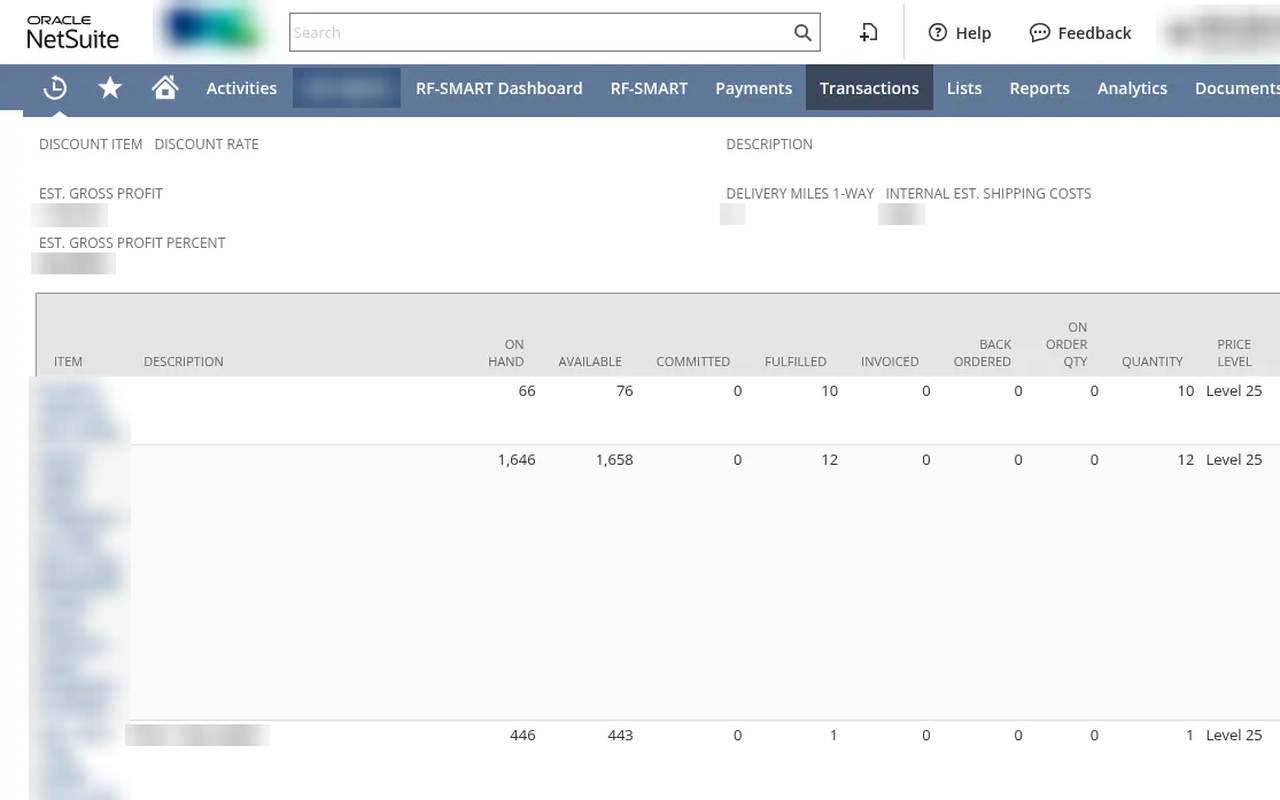
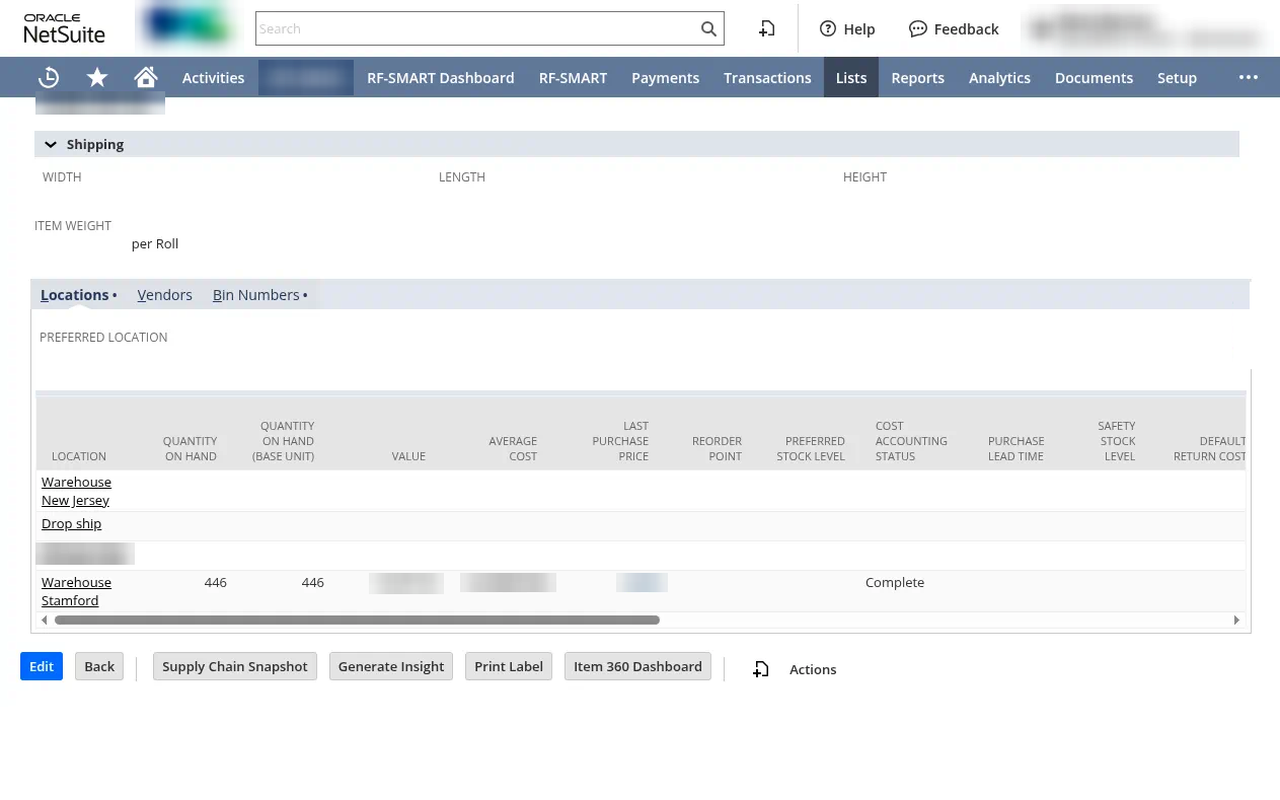
The result: more than $3,000 saved in lost inventory after connecting to NetSuite.
That’s the kind of number you only see when the count finally matches the shelf.
Where does AI fit in a QuickBooks to NetSuite move?
AI can’t fix a system that doesn’t exist. Once the core is in place, it helps with the rule-based work around it: reading purchase order emails, matching remittances, flagging a count that looks off.
That’s where distributors are seeing value first. In NAW’s 2026 AI Adoption Index, 47.4% of leaders who assessed it saw a moderate or significant effect on back-office efficiency (MDM). A person still checks the output. That’s the point, not a flaw.
Is moving off QuickBooks an accounting project?
No. Moving off QuickBooks Desktop touches all four parts of the business.
- Sales needs one customer record and quotes that become orders without retyping.
- Marketing needs to know what contractors buy, how often and when they go quiet.
- Operations needs the count to match the shelf and proof that the truck delivered.
- Technology is the core that connects the other three, not a fourth island.
The glue is how your customer actually works. When does the contractor order? From the truck or the office? Do they call, text or log in? How do they pay? Build the system around those answers and the software choice gets much easier.
No shortcut. A business that finally runs as one.
The 90-Min Diagnostic. In 90 minutes we map how your orders, inventory, invoices and payments connect, and where money slips out. Then we walk you through a few different ways to fix it, built around your own workflow, from a better process to a new core. You also see what the biggest distributors in your space are already doing about the same problem. Within 72 hours you get a written list of the leaks and what to fix first. $2,500, credited toward the build if you go ahead.
Questions owners ask me
When should a distributor switch from QuickBooks to NetSuite?
When two or more parts of the order-to-cash chain break at once: inventory that doesn’t match the shelf, orders typed more than once, no shared customer record, customers calling for balances, or add-ons patching add-ons. Revenue alone isn’t the signal. Map how an order moves first, then choose the system.
Is QuickBooks Desktop being discontinued?
Not for current users. Intuit stopped selling Desktop Pro Plus, Premier Plus and Mac Plus to new US subscribers after September 30, 2024. Existing subscribers can renew, Desktop Enterprise is still sold, and as of September 2026 Intuit says Desktop 2024 will keep getting updates with no May 2027 sunset.
Is NetSuite too big for a small distributor?
It can be. With one location, simple pricing and a single pain point, a better process or QuickBooks Desktop Enterprise may be enough. NetSuite pays off when inventory, sales, warehouse and accounting need one shared record and someone inside the company owns the system.
How do I avoid a failed NetSuite implementation?
Map the order-to-cash chain first, size the system for where the business is going, negotiate scope, timeline and renewal terms before signing, clean your data before migration, and only add tools that connect back to the core.
Sources: Intuit, "Can't buy QuickBooks Desktop as a new US subscriber", source. Intuit, "What's new in QuickBooks Desktop 2024", source. QuickBooks Community, "QB Enterprise inventory numbers not matching up", source. r/Netsuite, "Decision regarding a move to NetSuite", source. r/Netsuite, "Looking for advice on selecting an ERP as a midsize HVAC and LED distribution company", source. MDM on NAW's 2026 AI Adoption Index, source. r/CPGDistributors, "Inventory says one thing. Sales says another", source.
Photo credits: Hero photo by Arum Visuals on Unsplash (Unsplash).