


Blog · Getting paid
10.1% of insulation supply dollars run 91+ days late. Here are 6 ways distributors get paid faster.
Short answer: Distributors get paid faster when they treat late payment as customer behavior, not a collections chore. Invoice the day it ships with proof of delivery, send it to the person who pays and let contractors see and pay what they owe without calling. Remind before the due date and set terms by how each account really pays.
Think of cash like blood flow. A distributor can have strong sales, the heart, and still feel weak if the blood stops somewhere between the invoice and the bank.
Building materials supply knows this feeling. In Dun & Bradstreet’s Q2 2026 accounts receivable report, roofing, siding and insulation wholesalers reported only 75.9% of receivable dollars paid current and 10.1% more than 90 days late (D&B). In Q1 2026 it was 69.6% current and 12.8% past 91 days (D&B Q1 report). In that same Q1 report, lumber, plywood and millwork wholesalers showed 2.2% past 91 days.
Same neighborhood. Very different cash.
Definition: Days sales outstanding (DSO). DSO is the average number of days it takes to collect payment after a sale. Lower DSO means cash reaches the bank sooner. An aging report shows the same story by bucket: current, 1 to 30 days late and so on.
Why do contractors pay late?
Usually not bad intent.
Look at it from the contractor’s side.
- Many get paid by the job, so your invoice waits for their customer.
- The invoice went to the office manager, but the owner approves payments.
- One quantity looks wrong and there’s no proof of delivery, so the whole invoice sits.
- The statement arrives once a month as a PDF nobody opens.
- Paying means finding the checkbook or a portal login they forgot.
Every one of those is a behavior. And behavior is something you can design around.
Ownership matters too. At Spray Alliance, a spray foam distributor, information used to be scattered across spreadsheets, a server-based setup and QuickBooks Desktop. With no CRM, there was no clear ownership or traceability on an account. When nobody owns the account, nobody owns the reminder either.
How can a distributor get paid faster?
Six ways, without burning the relationship.
Invoice the day it ships with proof attached
An invoice sent at the end of the month starts the clock late. Attach the signed delivery ticket so the “we never got it” conversation never starts.
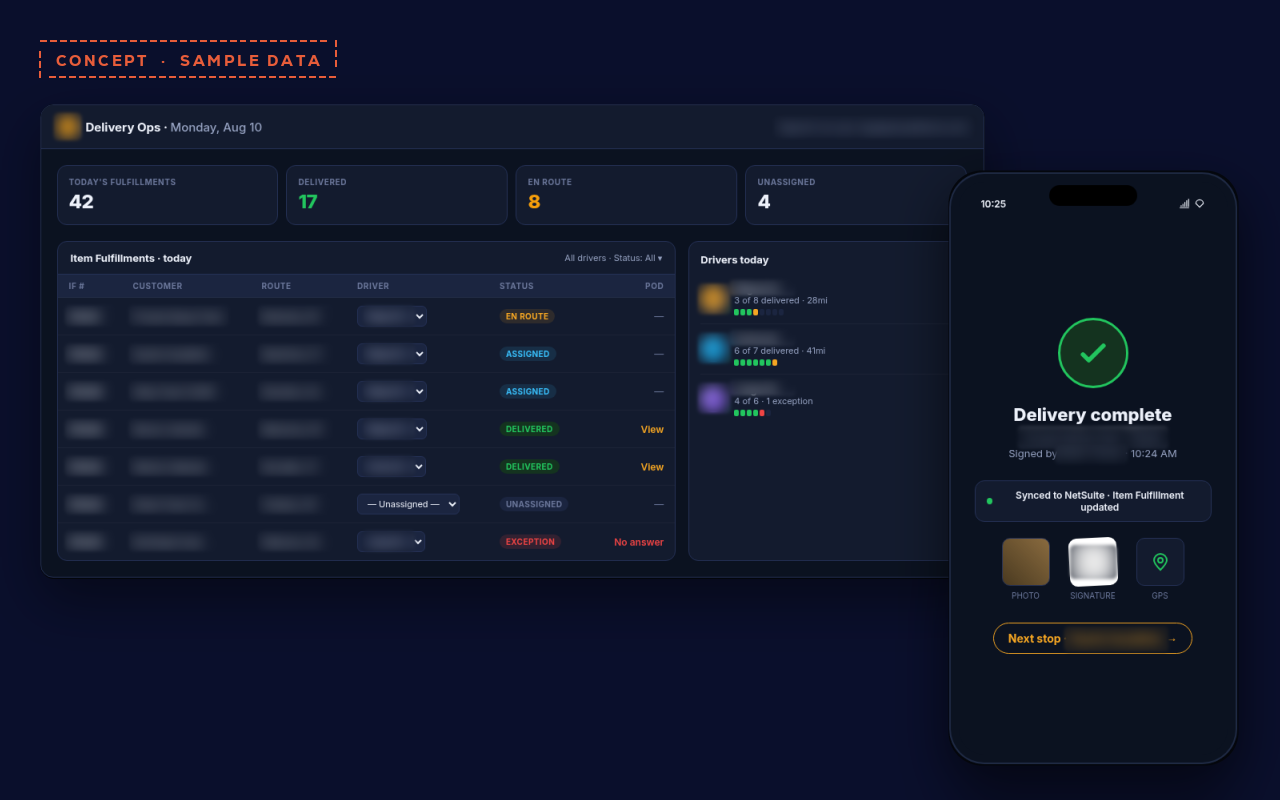
Send it to the person who pays
Capture the AP contact, the job name and the PO number the contractor uses when you open the account. An invoice that matches their paperwork moves faster through their approval.
Let customers see what they owe without calling
A customer portal and a regular statement email let contractors check balances and invoices on their own time. Your team stops being a help desk.
This isn’t theory. At Spray Alliance, the customer portal and statement emails are live in production.
Make paying the easy part
Put a payment link on every invoice and every statement. Card and ACH, from a phone. If paying takes more than a minute, it waits until later. Online payments are live at Spray Alliance too.
Remind before the due date, not after
A friendly note before the due date catches the invoice sitting in the wrong inbox. Owners in this r/smallbusiness thread describe the same habit: invoice the day the work is done and nudge before day 30, because “a lot of net 30 payments slip to net 45 just because nobody nudged.”
Set terms by behavior, not by habit
Not every account deserves the same terms. Accounts that pay on time keep net 30. Accounts that slip move to a deposit or shorter terms on the next order, the lever owners in this thread say works better than a late fee. And let sales see the balance before they quote. A rep who sees a 75-day balance quotes differently.
Example (illustrative, not client data): an account that always paid around day 28 slips to day 41, two months in a row. That’s your signal to call before the next order ships. Not after the account hits 91 days.
What should you track every week?
Use the same five buckets D&B uses: current, up to 30 days late, 31 to 60, 61 to 90, and 91+.
Add one more number: disputed invoices by reason. If “missing proof of delivery” keeps showing up, the fix lives in operations, not in collections.
How do the biggest distributors handle billing and payments?
Look at the largest building products distributors and the pattern is the same. Contractors get their own account online, they pay there, and the notices come to them automatically. Here’s what their own public pages say.
- ABC Supply. Through myABCsupply, contractors view statements and pay invoices online, pick how they want notifications (online only, email, fax or mail) and pull up delivery photos when they need them (ABC Supply).
- QXO, which TopBuild’s businesses are now part of (TopBuild). Customers pay through BillTrust, schedule future payments, see invoice and payment history and get email notifications of new invoices and statements (QXO bill pay). Deliveries come with advance notice, real-time notifications and delivery confirmation photos (QXO delivery tracking).
- Service Partners, an insulation distributor. Logged-in customers view and pay invoices online and check the status of their orders (Service Partners).
- Builders FirstSource. Its customer portal shows orders, scheduled deliveries, invoices, statements and payment history, takes ACH payments and lets customers choose how invoices and statements arrive, at no additional charge (MyBFSBuilder). The myBLDR side shows delivery photos too (myBLDR).
- Ferguson. Online Bill Pay gives commercial credit customers 24/7 access to their balances, invoices and statements, with pay today, a scheduled payment or autopay (Ferguson).
Side by side, here’s what each public page confirms.
| Company | Pay online | Statements online | Automatic notices | Delivery photos |
|---|---|---|---|---|
| ABC Supply | Yes | Yes | Yes, contractor picks the channel | Yes |
| QXO (TopBuild now part of it) | Yes, BillTrust | Not stated | Yes, new invoices and statements | Yes |
| Service Partners | Yes | Not stated | Not stated | Not stated |
| Builders FirstSource | Yes, ACH | Yes | Statement delivery preferences | Yes, on myBLDR |
| Ferguson | Yes, including autopay | Yes | Payment confirmations | Not stated |
| Spray Alliance (mid-market, live) | Yes | Yes, in the portal | Yes, statement emails | Not in the live set |
“Not stated” means the cited page doesn’t mention it, not that the feature is missing.
So the big players already give contractors a front door to their account. For a long time that looked like something only a company with its own IT department could build. Today a mid-market distributor can run the same pieces (a portal, automatic statements and online payments) on the ERP it already uses for orders and invoices, without building a custom platform from scratch.
What does it look like at a mid-market distributor?
Spray Alliance is a spray foam distributor, and it runs this setup today. It moved off QuickBooks Desktop first, which is the bigger story in outgrowing QuickBooks Desktop. The customer portal, the automated statement emails and online payments are all live in production.
Before. Information was scattered across spreadsheets, a server-based setup and QuickBooks Desktop. There was no CRM, so there was no clear ownership or traceability on an account.
The decision was to give contractors their own front door to the account, on the same NetSuite system that holds the order and the invoice, and to let the system send the notices instead of a person.
What the contractor sees and gets automatically:
- A customer portal. Balances and statements are there whenever the contractor wants to look, from the office or after hours.
- Statement emails. The balance lands in the contractor’s inbox on its own. Nobody at the distributor has to remember to send it.
- Online payments. Paying doesn’t wait for a checkbook, a stamp or a phone call to the office.
What it means on the distributor’s side. The system is built so the office isn’t the place contractors call to ask what they owe. Statements and payments run from the customer record in NetSuite, the same record sales and accounting already use.
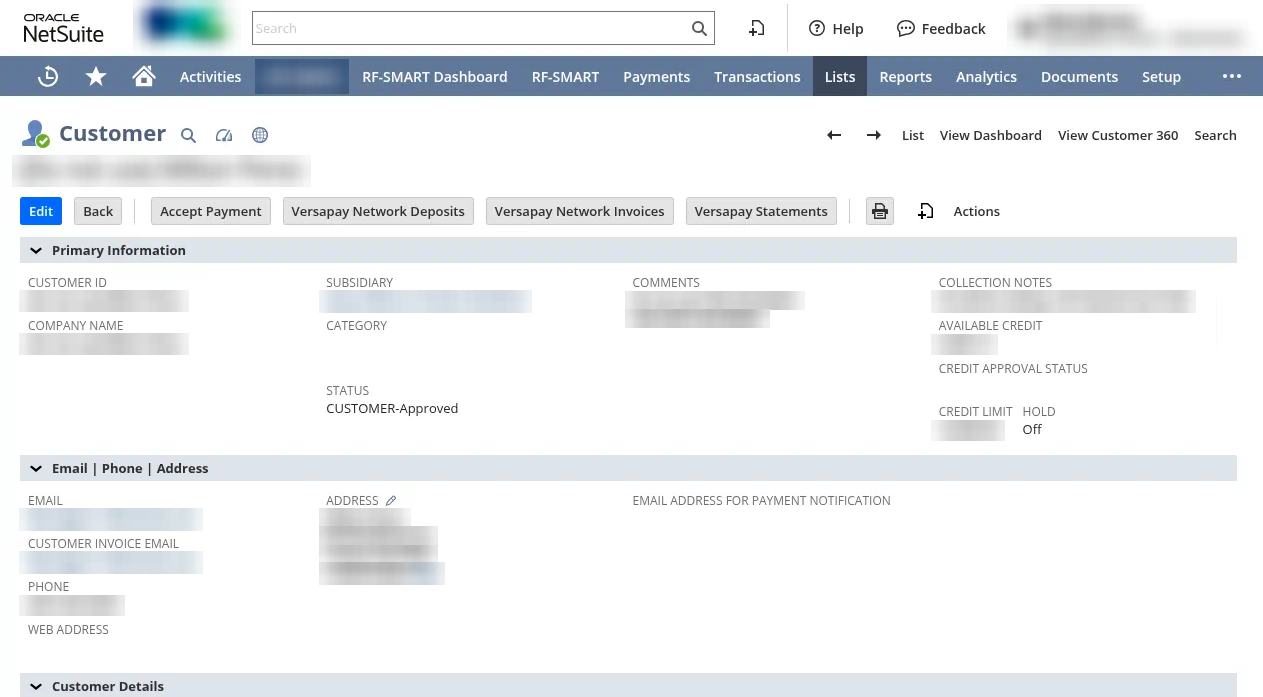
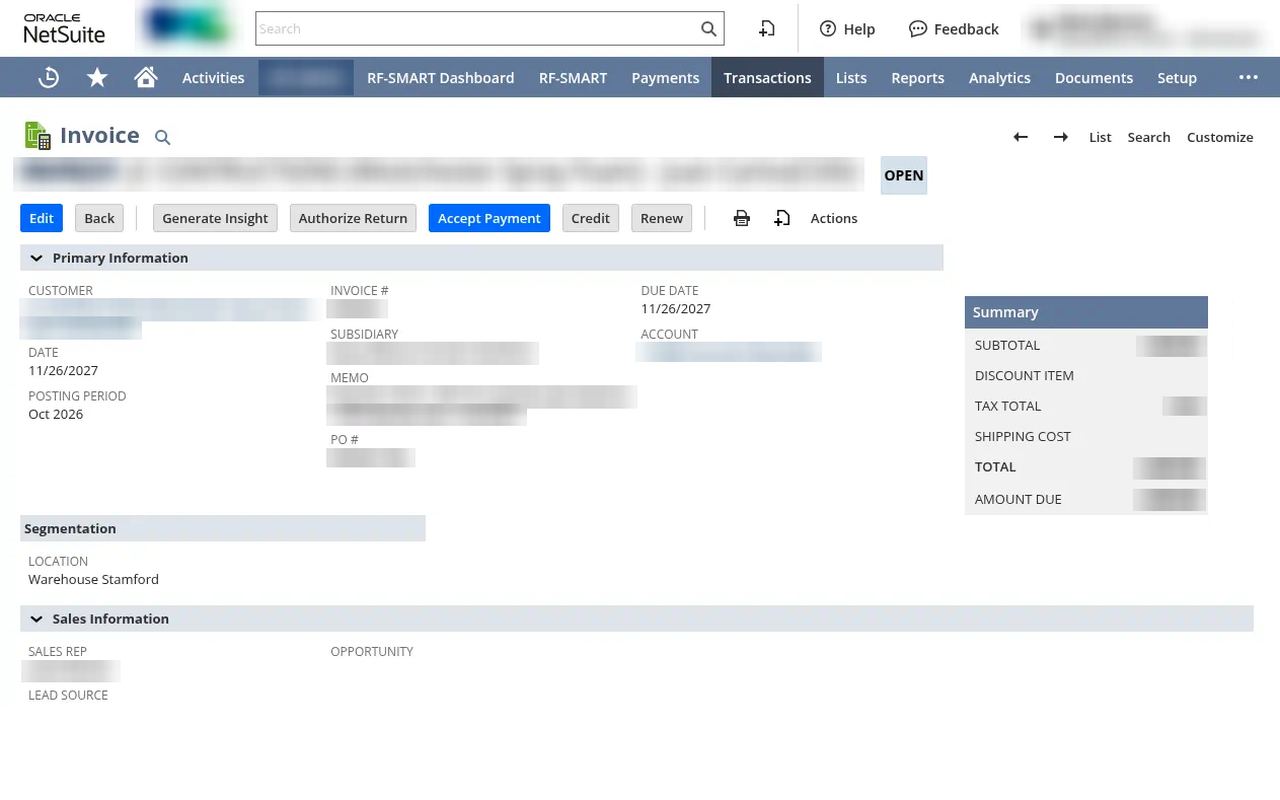
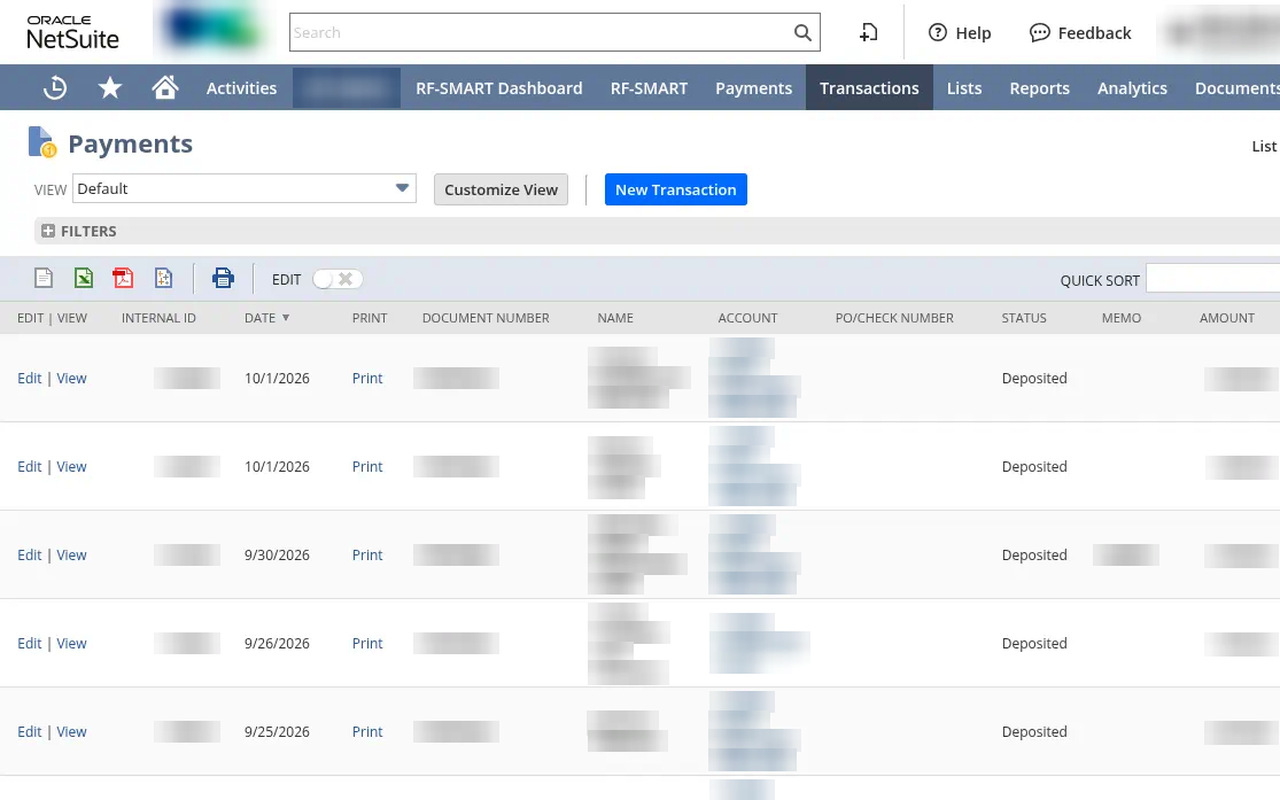
The published result on that project is about inventory: more than $3,000 saved in lost inventory after connecting to NetSuite. There’s no collections number to share, so none is quoted here. What’s real is a contractor-facing system that’s live in production, with the portal, the automatic statements and the payments all on one record.
Compare that with the D&B numbers above. When 10.1% of a segment’s receivable dollars run more than 90 days late, making the balance easy to see and easy to pay is one of the few levers fully in your hands.
Can automation or AI handle collections?
It can handle the repetitive part.
Automation and AI are good at the repetitive parts: sending reminders on schedule, matching payments to invoices, flagging an account whose payment habits are changing. Remittance documents and credit memos are exactly the kind of back-office work where NAW’s 2026 AI Adoption Index coverage says distributors see value first (MDM).
A person should still make the call. Literally. The contractor who’s slipping usually has a reason, and the relationship is worth more than an automated warning.
Why is getting paid a system problem?
Getting paid isn’t an accounting problem that starts after the sale. It’s the last step of everything before it.
- Sales sets the terms and sees the balance before the next quote.
- Marketing shapes how the customer experiences you, including the portal and the statement.
- Operations produces the delivery proof that makes an invoice hard to dispute.
- Technology connects the order, the proof, the invoice and the payment.
The glue is how your contractors actually pay. Who approves? When does their AP run? Do they pay from a phone in the truck or from the office on Friday? Do they dispute quantities or prices? Read that behavior and the fix almost designs itself.
No shortcut. A chain that pays you on time because it was built around your customer.
The 90-Min Diagnostic. In 90 minutes we map how your orders, deliveries, invoices and payments connect, and where cash gets stuck between the invoice and the bank. Then we walk you through a few different ways to fix it, built around how your contractors actually pay, from better reminders to a customer portal. You also see what the biggest distributors in your space are already doing to get paid. Within 72 hours you get a written list of the leaks and what to fix first. $2,500, credited toward the build if you go ahead.
Questions owners ask me
How can a distributor get customers to pay invoices faster?
Invoice the day it ships with proof of delivery, send it to the person who approves payments, let customers see balances in a portal or statement email, add a payment link for card or ACH, remind before the due date, and set terms by each account’s real payment behavior.
What’s a normal level of late receivables for a building materials distributor?
It depends on your terms and customer mix, so benchmark against your own segment. Dun & Bradstreet’s quarterly A/R report breaks payment performance out by industry. In Q2 2026, roofing, siding and insulation wholesalers reported 75.9% of receivable dollars paid current and 10.1% more than 90 days late.
Should I charge late fees on net 30 invoices?
Late fees get attention, but many owners find terms are the stronger lever: accounts that pay late move to deposits or shorter terms on the next order. Whatever you choose, put it in your credit terms up front and apply it the same way every time.
Can automation or AI handle collections?
Automation can send reminders, match payments and flag accounts whose payment habits change. A person should still make the call on a slipping account, because the reason and the relationship matter more than the reminder.
Sources: Dun & Bradstreet, U.S. Accounts Receivable Industry Report, Q2 2026 preview table, source. Dun & Bradstreet, Q1 2026 report PDF, source. r/smallbusiness, "Clients pay net-30. My vendors want their money now.", source. r/smallbusiness, "Do you guys actually enforce late fees on Net 30 invoices?", source. MDM on NAW's 2026 AI Adoption Index, source. ABC Supply, "myABCsupply", source. QXO, "Online payments with QXO", source. QXO, "Order and delivery tracking", source. TopBuild, "TopBuild is now QXO", source. Service Partners, "FAQ", source. Builders FirstSource, "MyBFSBuilder FAQs", source. Builders FirstSource, "myBLDR", source. Ferguson, "How to Use Pay My Bills", source.
Photo credits: Hero photo by Kurt z on Unsplash (Unsplash).